Hydrogen is emerging as an important technology for clean energy, industrial decarbonization, transportation and future mobility.
But how does the complete hydrogen energy system actually work?
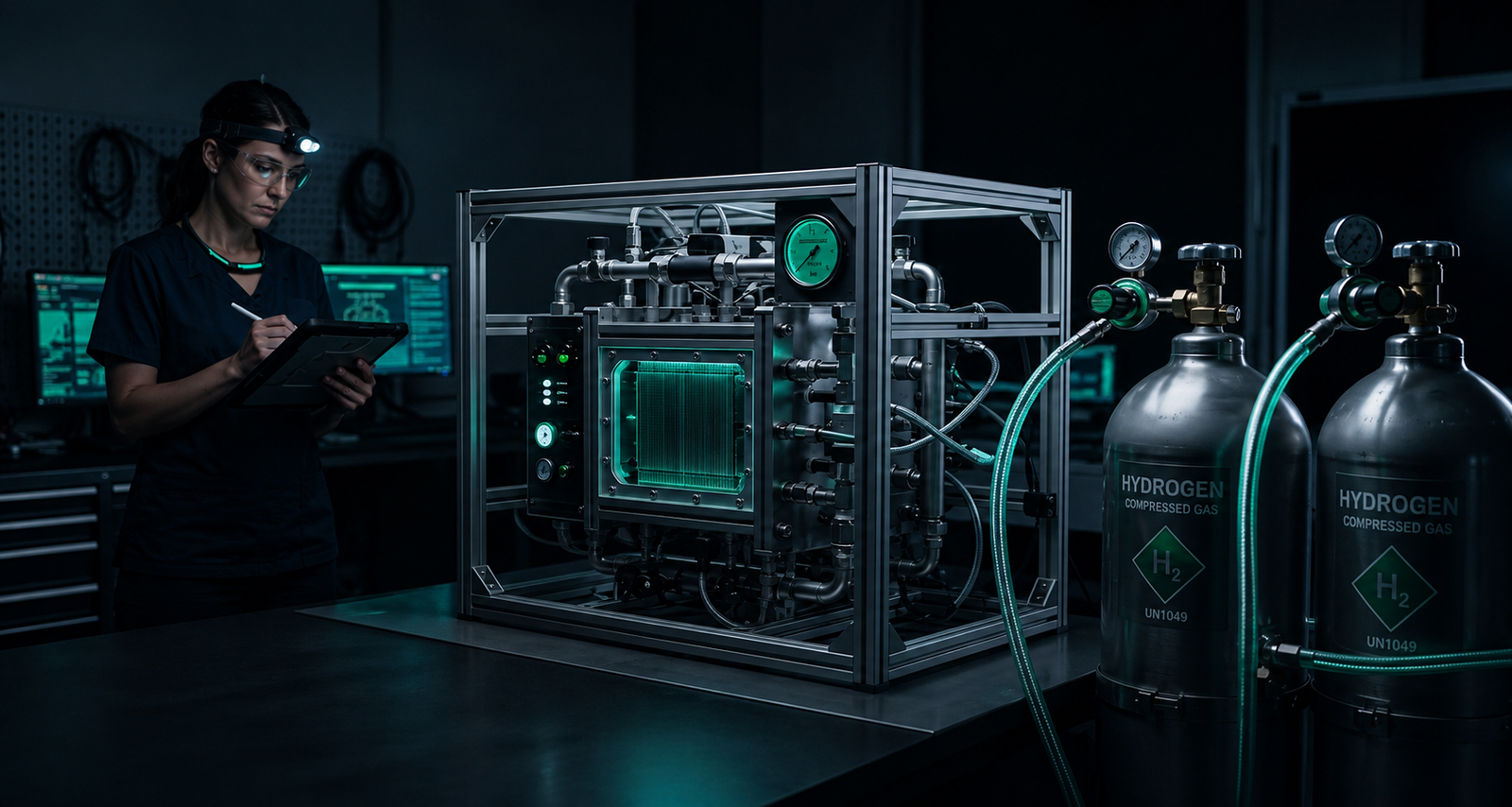
This course takes you through the engineering journey from hydrogen production to storage and finally electricity generation using fuel cells.
You will learn the technologies, engineering principles, efficiency challenges and safety considerations behind the hydrogen ecosystem.
The course connects the major stages of a hydrogen energy system:
Production → Purification → Compression → Storage → Transportation → Fuel Cell → Power Generation → Application
Understanding this complete chain helps you see how decisions at one stage affect the performance, efficiency, cost and safety of the overall system.
Hydrogen brings together several engineering disciplines, including:
Mechanical Engineering | Chemical Engineering | Electrical Engineering | Automotive Engineering | Energy Engineering | Fuel Cell Technology
This makes hydrogen knowledge valuable for students and professionals exploring clean energy, fuel cells, EVs, automotive technology and future mobility.
By the end of this course, you will have a structured understanding of how hydrogen is produced, purified, stored and used in fuel-cell systems, along with the major engineering challenges involved in making hydrogen-based energy systems practical.
Build your foundation in hydrogen engineering and understand the technology shaping clean energy and future mobility.