
Lead Process Engineer for electrolysis projects Mumbai, Maharashtra, India — thyssenkrupp nucera...Read More
| Edgeline Motorsports Academy — STM32 Microcontroller Engineering | ||||
|---|---|---|---|---|
| Skill Match Table | Focused on the most important embedded / firmware job-relevant skills | ||||
| Course: Microcontroller Engineering with STM32: Architecture to Applications | ||||
| Average Match: 73% | Core Skills: 12 | Partial: 4 | Priority Gaps: 2 | |
| What this score means: a curriculum-to-job technical alignment estimate. It is not an employer score, hiring guarantee, or eligibility decision. | ||||
| Skill Employers Ask For | Course Coverage | Your Match | What Edgeline Course Teaches | Career / Job Relevance |
| ARM Cortex-M Architecture | ✓ Yes | 100% | Cortex-M core, internal architecture, registers and bus-system fundamentals | Core requirement for embedded firmware roles |
| STM32 Microcontroller Architecture | ✓ Yes | 100% | STM32 families, architecture, block diagrams and register-level foundations | Direct match for STM32 embedded roles |
| Datasheet / Specification Reading | ✓ Yes | 95% | Reading MCU block diagrams, datasheets and specifications | Important for driver development and hardware debugging |
| Bare-Metal Microcontroller Programming | ✓ Yes | 95% | Register-level MCU configuration and programming foundations | Strong foundation for firmware and driver development |
| Memory System & Memory Mapping | ✓ Yes | 85% | Flash, SRAM, EEPROM, stack, heap and memory mapping | Important for low-level firmware understanding |
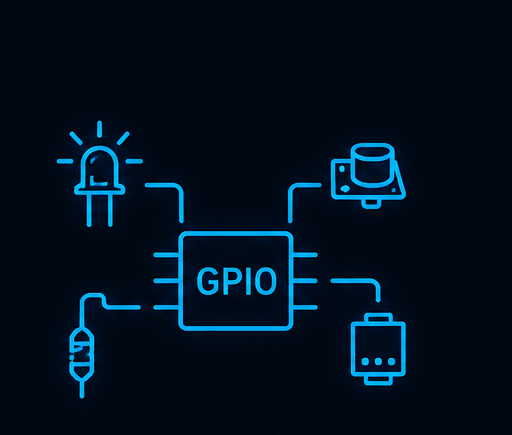
| GPIO Configuration & Control | ✓ Yes | 100% | Register-level GPIO using MODER, ODR, IDR and BSRR | Core hardware-interfacing skill |
| Clock System / Clock Tree | ✓ Yes | 95% | Oscillators, PLL and system/peripheral clock infrastructure | Important for timing and peripheral operation |
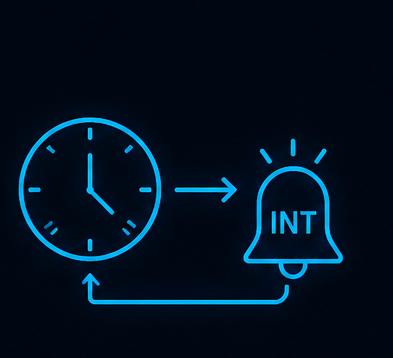
| Interrupts / NVIC / EXTI | ✓ Yes | 95% | Interrupt concepts and register-level EXTI configuration | Core event-driven embedded firmware skill |
| Embedded Systems Fundamentals | ✓ Yes | 95% | MCU architecture and application-oriented embedded concepts | Useful across automotive, IoT, robotics and industrial electronics |
| MCU Peripheral Architecture | ✓ Yes | 90% | Peripheral architecture and configuration concepts | Foundation for developing peripheral drivers |
| Timers | ✓ Yes | 75% | General-purpose and advanced timers with use cases | Relevant to timing, PWM and embedded control |
| STM32CubeIDE | ✓ Yes | 80% | Hands-on STM32 development using STM32CubeIDE | Relevant to STM32 firmware development workflow |
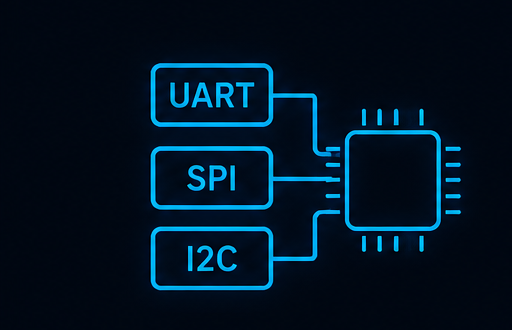
| UART / SPI / I2C | ◐ Partial | 50% | Communication protocols are covered as an overview rather than deep driver development | Important next step for hands-on embedded interfaces |
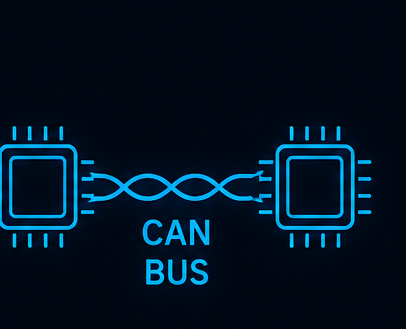
| CAN Communication | ◐ Partial | 35% | CAN is included at overview level | Important for automotive embedded applications |
| Embedded C / Firmware Development | ◐ Partial | 65% | Low-level programming foundations and embedded software best practices | Strong foundation; production firmware needs more practice |
| PCB / Hardware Bring-Up | ◐ Partial | 30% | Hardware concepts support firmware-hardware understanding, but PCB design and lab bring-up are not core modules | Important for hardware-software integration roles |
| RTOS / FreeRTOS | ✕ No | 15% | Not a dedicated module in the published course | Major next skill for production embedded roles |
| Git / Version Control & Team Workflow | ✕ No | 10% | Not a core course topic | Important for professional firmware development |
| Improve Your Match — 5 Practical Next Steps | ||||
| 1. Add UART / SPI / I2C hands-on driver development and peripheral projects. | ||||
| 2. Learn FreeRTOS and real-time task, synchronization and debugging concepts. | ||||
| 3. Add CAN / CANopen for automotive embedded applications. | ||||
| 4. Strengthen Embedded C, Git, debugging and hardware bring-up workflow. | ||||
| 5. Build one portfolio project: STM32 → GPIO/interrupts → peripherals → CAN/RTOS → hardware validation. | ||||
| Recommended Edgeline Direction | ||||
| After this course: Advanced STM32 Peripherals → Embedded C / Drivers → FreeRTOS → CAN/CANopen → Git & Debugging → Automotive Embedded / BMS / Motor Control. | ||||
| Current Job Relevance Checked | ||||
| Eaton — Associate Engineer / Embedded Software, Pune — STM32, C/C++, RTOS, I2C/SPI/UART and hardware-software integration. | ||||
| Chheda Electricals & Electronics — Embedded Software Developer, Pune — embedded C/C++, microcontrollers, UART/SPI/I2C/CAN and hardware debugging. | ||||
| Iravan Technologies — Embedded Software Engineer (Automotive), Pune/Bangalore/Hyderabad — bare-metal/RTOS, interrupts, peripherals, CAN and embedded C/C++. | ||||
| Vestval — Embedded Systems Intern, Pune — STM32/ESP32, embedded C/C++, sensors, datasheets and hardware-software integration. | ||||
| Source basis: Edgeline's published STM32 course curriculum plus current embedded/firmware job requirements checked in September 2026. The course focuses on ARM Cortex-M, STM32 architecture, memory, GPIO, clocks, interrupts, timers, communication-protocol overview, STM32CubeIDE and embedded-software foundations. Match percentages are curriculum-alignment estimates, not employer-issued scores. | ||||


